
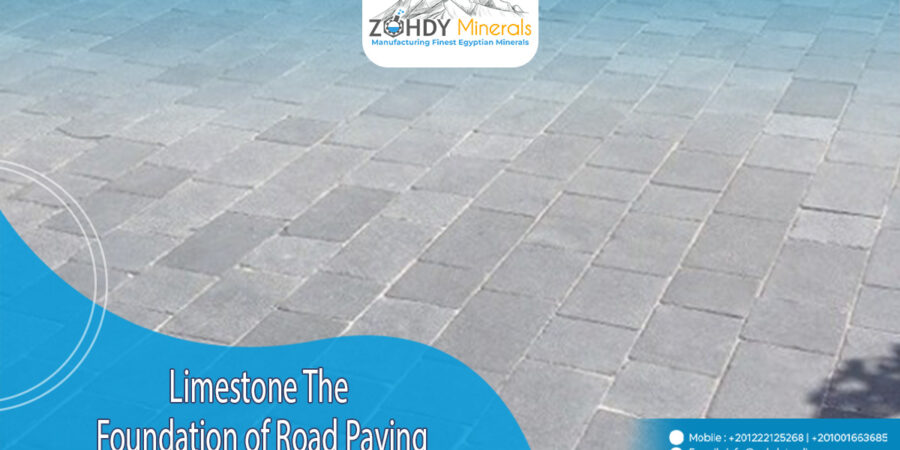
Limestone is more than just a common rock; it is a natural treasure that has played a pivotal role in the development of numerous industries worldwide.
Composed mainly of Calcium Carbonate (CaCO3), it is characterized by its hardness and slow chemical decomposition, making it an ideal material for applications requiring long-term quality and stability.
In the Kingdom of Saudi Arabia, Zohdy Minerals Egypt stands at the forefront as a leading entity in limestone utilization. The company adheres to the highest standards of quality and efficiency to meet the requirements of major projects in construction, agriculture, and water treatment, ensuring the delivery of a durable and sustainable product.
Definition and Characteristics of Limestone
Limestone is a sedimentary rock consisting primarily of Calcium Carbonate. It typically results from the accumulation of microscopic marine organisms or chemical precipitation processes in both fresh and saltwater. Its key characteristics include:
-
Color: Ranges from white to gray, and sometimes yellowish-white.
-
Hardness: Medium hardness, reaching 3-4 on the Mohs scale.
-
Chemical Decomposition: Reacts with weak acids to release carbon dioxide gas.
-
Thermal Stability: Withstands relatively high temperatures without losing its properties.
Types of Limestone
Limestone varieties differ based on composition and source:
-
Hard Limestone: Contains a high percentage of Calcium Carbonate; used in construction and heavy industries.
-
Porous Limestone: Features small pores; ideal for filtration and water treatment.
-
Soft Limestone: Contains lower carbonate levels; used in agriculture and cement manufacturing.
-
Organic Limestone: Formed from marine remains; utilized in chemical industries.
General Applications of Limestone
1. In Construction:
-
Cement Manufacturing: Ground and mixed with clay to produce high-quality cement.
-
Traditional Building: Used for stone blocks, foundations, and walls.
-
Ornamentation: Ideal for interior and exterior decoration due to its natural beauty.
2. In Agriculture:
-
Soil Acidity Adjustment: Increases the pH value of acidic soils.
-
Crop Quality: Provides essential calcium for plant growth.
-
Acid Neutralization: Reduces acid impact on roots and improves nutrient retention.
3. In Water Treatment:
-
Purification: Precipitates heavy metals and impurities.
-
pH Adjustment: Raises pH levels in acidic water sources.
-
Pipe Protection: Reduces corrosion in water pipes caused by acidity.
How Limestone is Applied Across Different Sectors
Construction and Concrete:
-
Type Selection: Hard or medium-hard limestone is selected based on the project.
-
Grinding: The stone is pulverized into a fine powder to be mixed with cement and sand.
-
Application: The mixture is poured into molds or used as a foundation for flooring, providing the required structural durability.
Soil and Agriculture:
-
Acidity Testing: Soil pH is measured to determine the required treatment level.
-
Application: Soft limestone powder is spread across or mixed into the soil.
-
Monitoring: Periodic analysis ensures the limestone is effectively improving fertility and crop yield.
Water Treatment Systems:
-
Integration: Porous limestone is placed in water tanks or treatment plants.
-
Chemical Reaction: It facilitates the precipitation of heavy metals and balances the water’s acidity.
Environmental Benefits
-
Environmental Acid Reduction: Effectively treats acidified soil and water.
-
Pollution Control: Contributes to removing impurities and heavy metals.
-
Resource Sustainability: Being a natural and easily processed material makes it a sustainable choice for green projects.
Practical Tips for Using Limestone
-
Verify Quality: Ensure the stone type matches the specific industrial or agricultural purpose.
-
Control Dosage: Avoid excessive application to prevent adverse chemical effects.
-
Ensure Proper Mixing: Whether with soil or cement, homogeneity is key to success.
-
Safety Precautions: Use gloves and masks when handling limestone powder to avoid inhalation or skin irritation.
Limestone is a strategic element in various industries, from agriculture to high-tech water treatment. When used through well-studied methods, it leads to effective and sustainable results.
Zohdy Minerals Egypt continues to transform this natural resource into a strategic asset that enhances production efficiency and the quality of final results for the Saudi market and beyond. By understanding its diverse types and properties, manufacturers can maximize the value of limestone, moving it from a simple rock to a cornerstone of modern development, Contact Us.